
November 25, 2023 by admin
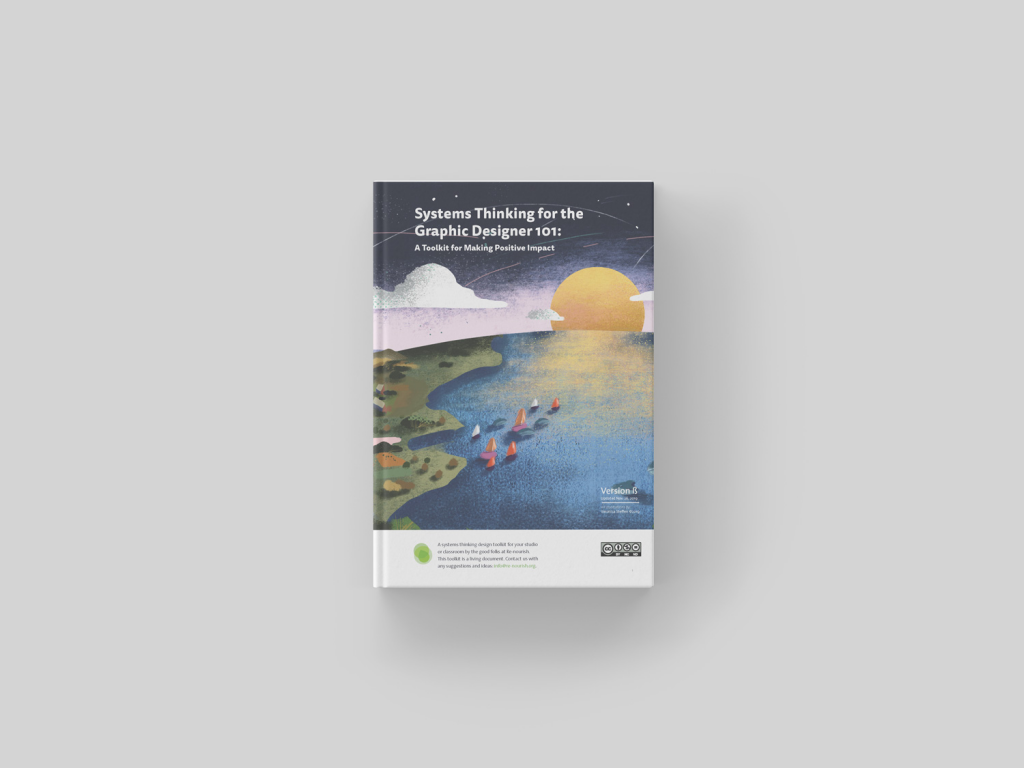
Systems Thinking for the Graphic Designer 101: A Toolkit for Making Positive Impact
Source: Benson, E. (n.d.). Systems Thinking for the Graphic Designer 101: A Toolkit for Making Positive Impact. Retrieved from https://teachingresource.aiga.org/project/systems-thinking-for-the-graphic-designer-101-a-toolkit-for-making-positive-impact/
PROJECT BRIEF
Use the systems thinking process initially proposed in the book Design to Renourish and any design methods (cultural probes, storytelling, user flows/personas, life cycle analysis, etc.) that make sense with your chosen topic and strategies. Document everything. Create a research database for the team you will share throughout the project.
Pick one of these general larger issues below and propose a specific sub-topic. Go deep into the problem following the Re-nourish systems thinking process to define and create a design solution that ideally is carbon positive. It is best to keep the sub-topic more local or regional. Small bets! The project will be critiqued in a public setting.
Health
(e.g.) How might we make the Emergency Department waiting room more humane and user-focused?
Education
(e.g.) How might we improve education and expand learning opportunities for refugees worldwide?
Democracy
(e.g.) How might we design an accessible election experience for everyone? How can we more engage people to vote?
Planet
(e.g.) How can we effectively change our consumption habits, keep a high quality of life, and stop global warming?
—
The Goals of Systems Thinking
- Eliminate waste
- Renourish our planet (reparations for nature)
- Renourish our souls with a beautiful object or service
- Create reciprocity (a gift that creates an ongoing relationship)
- Create with, not for – inclusivity
- Have a purpose, not just profit (improve quality of life)
- Advocacy for marginalized voices (reparations for others)
LEARNING OBJECTIVES
Students will learn during this project:
- Sustainable Design Strategies
- Human Centered Design principles
- New design methods and tools
- The “Design to Renourish” systems thinking method:
- 1. Determine project goals
- 2. Map out the design problem
- 3. Brainstorm design outcomes
- 4. Evaluate each possible project outcome
DELIVERABLES
At the end of the project, students should deliver:
- A digital presentation that details the project goals completed in Step Two from the “Design to Renourish” systems thinking method
- A detailed and visually stimulating digital mapping of the design problem completed in Step Two from the “Design to Renourish” systems thinking method
- A digital presentation of possible design solutions and the process/methods/tools used to determine which project was the best considering the audience(s) and the planet
- Your final solution implemented in the format and medium that best fits the design problem, audience(s), and planet
READINGS/RESOURCES
Required Readings:
- Design to Renourish (The book is too expensive)
- Design Thinking Needs to Think Bigger
- Designers’ Code of Ethics
- “What is Human Centered Design?” Giacomin, J. (2014). What Is Human Centered Design?, The Design Journal, 17:4, 606-623. (Not Required)
Required Films:
Resources & Inspiration:
- The Next System Project
- What is a Circular Economy (The Ellen MacArthur Association)
Benson, E. (n.d.). Systems Thinking for the Graphic Designer 101: A Toolkit for Making Positive Impact. Retrieved from https://teachingresource.aiga.org/project/systems-thinking-for-the-graphic-designer-101-a-toolkit-for-making-positive-impact/
The First Part of this assignment involves selecting your topic. Please submit it via dropbox with bullet points illustrating how you came to this topic.
The following slide is just one of many you will need to create in order to fulfil your assignment.
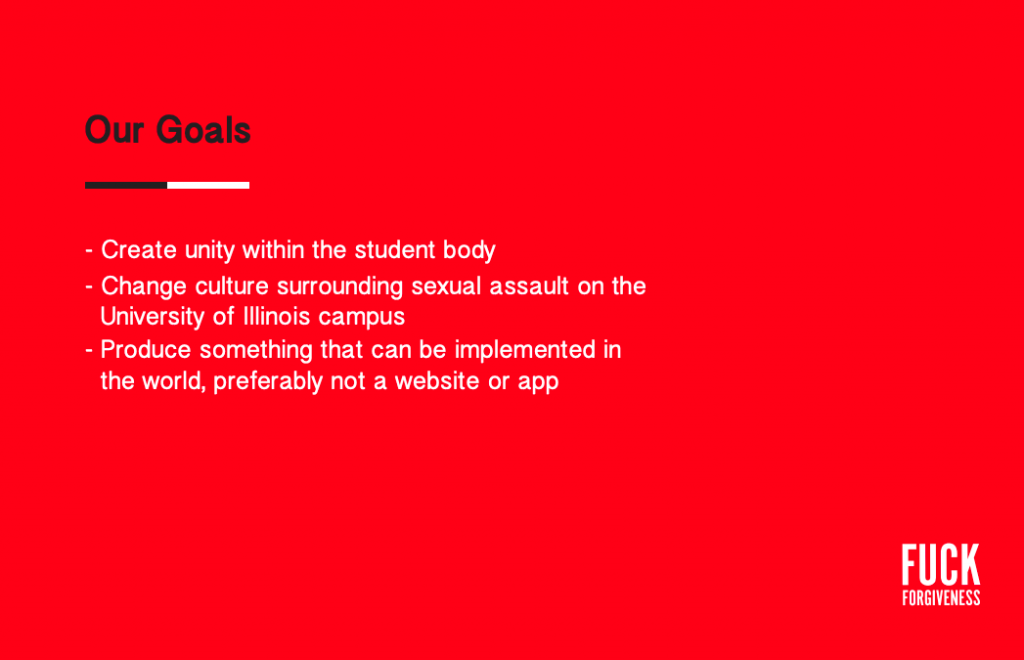
Project Goals
The Problem Map should be Poster sized. Horizontal – 24″ x 36″
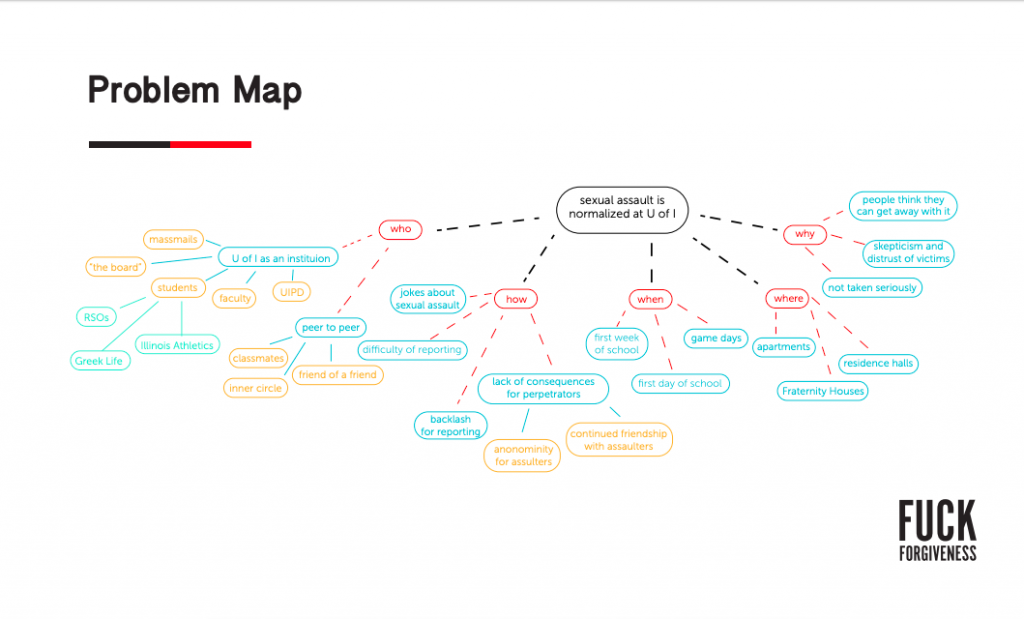
Problem Map
The Following is just one of many examples you will need to create to fulfil the full assignment. This is a complete campaign.

Project implemented on the streets